Wednesday, January 4, 2017

Crutcher, Chris. (2007). Deadline. New York: HarperCollins.

Ben Wolf about to begin his senior year in high school was given shocking news from his doctor when he went for his annual physical exam. He had a rare, aggressive blood disorder which would only give him about a year left to live. Ben chose not to have any treatment and not tell anyone because he wanted his last year to be "normal". He went out for the football team. His brother was the quarterback, they talked about how together, they made a great man. He finally talked to Dallas Suzuki, the prettiest girl in the world. He lived his life to the fullest. He befriended the town drunk, Rudy McCoy, and learned his secret past. When he finally told people, they started treating him different, which is what he didn't want. Unfortunately, Ben dies before his high school graduation. Even though I knew he was dying, it still upset me. I could relate to Ben, because I too had leukemia. I knew how he felt when he had his feelings of fatigue, when he saw visions of Dallas Suzuki, wondering if they were real. He lived his life to the fullest. If he had taken chemo and radiation it might have extended his life by a few months but his quality of life would have been completely different. Ben Wolf chose quality of life over quantity of life.

Quintero, Isabel. (2014). Gabi: a girl in pieces. Cinco Puntos Press.
Gabi’s family life is unbalanced. Her father is a drug addict who comes in and out of her life sporadically. Her mother tries desperately to keep her tethered to the values of her traditional Mexican heritage. Gabi Hernandez chronicles her last year in high school in her diary: college applications, Cindy’s pregnancy, Sebastian’s coming out, the cute boys, her father’s meth habit, and the food she craves. And best of all, the poetry that helps forge her identity.When she gets into her number one school,
Berkley, her decision gets even harder.  


I would recommend this to high school students.  I think that this book has a style of its own since it is Gabi telling her story in a diary with letters to her dad about how he is making her feel. 


Green, John. (2012). The fault in our stars. New York. Dutton Books.
Hazel Grace is a teenage girl with cancer.  While at support group she meets a boy, Augustus, who also has cancer.  Augustus uses his wish to take Hazel to Amsterdam to meet the author of the book that started their friendship.  When they get back home Augustus cancer comes back.  Hazel stays with him until the end.  At the end Hazel gets the eulogy Augustus wrote and sent to Van Houten.  I think this book would be a good read for high school students since Hazel and Augustus are high school aged.  I think that characters in this story make this story.  I was drawn to these two and felt like I was going along in their journey also.


Smith, Andrew. (2011). Stick. New York. Feiwel and Friends Book.

Fourteen-year-old Stark McClellan (nicknamed Stick because he's tall and thin) is bullied for being "deformed" - he was born with only one ear. His older brother Bosten is always there to defend Stick. But the boys can't defend one another from their abusive parents.
When Stick realizes Bosten is gay, he knows that to survive his father's anger, Bosten must leave home. Stick has to find his brother, or he will never feel whole again. In his search, he will encounter good people, bad people, and people who are simply indifferent to kids from the wrong side of the tracks. But he never loses hope of finding love - and his brother. This is a powerful young adult novel full of joy, heartbreak, and survival.
Black, Holly. (2010). The poison eaters. Easthampton, MA: Big Mouth House.
Enter a world wear fairies live among us. Where all the vampires are kept in a separate part of town called Coldtown. Where people can turn into wolves and back again. Where characters can come to life from books. These are just a few of the worlds that Holly Black presents in her collection of stories. These represent the dark side of the fantastical world, with eerie descriptions of night markets and deaths, lost loves and secret Latin cults. All will pull you into another world and engross you in short but vivid stories about both magical people and the normal ones who live among them.
Block, Francesca Lia. (2014). The island of excess love. New York: Henry Holt & Company.
In The Island of Excess Love, Pen has lost her parents. She's lost her eye. But she has fought Kronen; she has won back her fragile friends and her beloved brother. Now Pen, Hex, Ash, Ez, and Venice are living in the pink house by the sea, getting by on hard work, companionship, and dreams. Until the day a foreboding ship appears in the harbor across from their home. As soon as the ship arrives, they all start having strange visions of destruction and violence. Trance-like, they head for the ship and their new battles begin.


Other titles by Francesca Lia Block include:
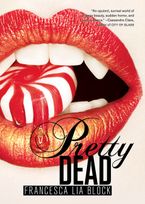
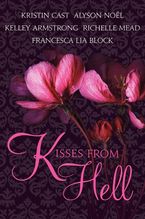
  pretty-dead    pink-smog     kisses-from-hell

The invention of Hugo Caberet by Brian Selznick

Selznick, Brian. (2007). The invention of Hugo Cabret.  New York : Scholastic 

It's like watching a silent movie, in book form. It's a mysterious, heartwarming tale about an orphan boy who hides in a Paris train station, keeping the clocks running, hoping to one day uncover the secret of the little mechanical man left him by his father. It's the story of magic: the magic of clockworks, the magic of magic tricks, and the magic of the movies. It's about finding secrets, about rediscovering your past and reinventing yourself. And it's absolutely gorgeous. In The Invention of Hugo Cabret, Hugo’s got quite a challenging life for such a little boy—he has to work on clocks, he lives in a train station, he’s orphaned, and the list goes on. But he still somehow finds the time and optimism to be in awe of things. And no wonder! He’s experiencing the magic of film, automatons, and meeting a real live magician. If there’s anything that this book is about, it’s about magic—and how you can always be amazed by it. Georges Méliès finds magic in film, but there’s magic to be found in everyday life, too. After all, Hugo and Isabelle find it as they’re looking out over the city of Paris at night.